ISO 50001: A Complete Guide for Multi-Site Enterprises

Buildings account for 40% of the EU's total energy consumption and over half of all gas use (European Commission, 2024) . Energy is one of the largest controllable operating costs in any building portfolio, and the pressure to cut it is coming from regulators, investors, and tenants at the same time.
Most organisations discover the same uncomfortable truth at exactly the same moment: when ISO 50001 implementation begins, their energy data is fragmented, delayed, and inconsistent across sites.
“Many organisations discover at the energy review stage that fragmented or manual data processes prevent effective energy management.” (ENITY, 2026)
Not in theory. In practice. Meter readings arrive in different formats from different suppliers. Energy baselines are missing for half the portfolio. Some sites have never been metered at sub-system level. The management system design is often sound. The data infrastructure underneath it is not.
This guide is written for three types of reader: those building a business case for ISO 50001 certification, those mid-implementation navigating clause-by-clause requirements, and those preparing an evidence pack for an imminent audit.
What Is ISO 50001?
ISO 50001 is the international standard for Energy Management Systems (EMS), published by the International Organization for Standardization. It was first released in June 2011 and updated in August 2018 as ISO 50001:2018.
A 2024 climate action amendment confirms the standard continues to evolve in line with net-zero commitments and the climate change obligations facing organisations across every sector.
Why Does ISO 50001 Matter for Real Estate Portfolios Right Now?
The EU's revised Energy Performance of Buildings Directive (EPBD, in force May 2024) requires renovation of the 16% worst-performing non-residential buildings by 2030, rising to 26% by 2033 (European Commission, 2024). Given that 85% of EU buildings were built before 2000 and 75% have poor energy performance, the renovation pipeline is enormous and so is the compliance risk for portfolios that can't demonstrate systematic energy management.
Three forces are converging on real estate owners simultaneously:
- Regulatory pressure. The EPBD, EU Taxonomy, and national energy efficiency obligations are tightening. Buildings that can't prove structured energy management face stranded asset risk and potential penalties. Explore how the EPBD's BACS requirements interact with your energy management obligations.
- Investor and ESG pressure. GRESB scores, CRREM pathways, and SFDR disclosures all require verifiable energy performance data. ISO 50001 creates the documented audit trail that makes ESG reporting credible. If you're working on GRESB reporting, ISO 50001 directly supports the Management component, which accounts for roughly 30% of your total score.
- Cost pressure. Energy prices remain volatile. The IEA projects buildings energy intensity must fall 35% by 2030 versus 2022 levels; a five-fold acceleration versus the prior decade (IEA, 2024). Portfolios that manage energy systematically protect margins and reduce exposure to price spikes.
Built on a Framework You Already Know
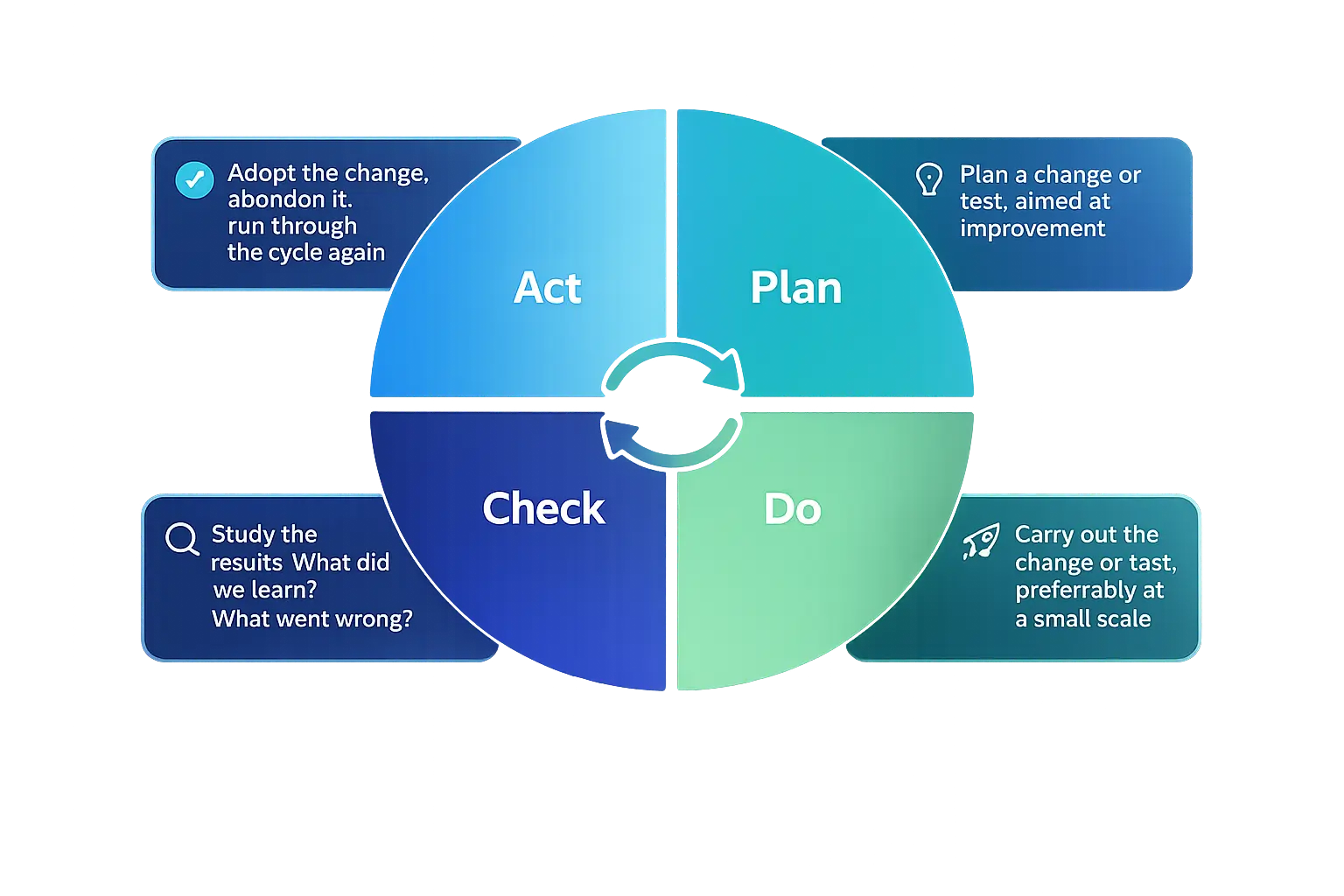
ISO 50001 is modelled after ISO 9001 (quality management system) and ISO 14001 (environmental management system). All three share the same Plan-Do-Check-Act (PDCA) cycle and high-level clause structure, which makes integration with existing management systems straightforward. For organisations already certified to ISO 9001 or ISO 14001, the ISO 50001 energy management framework will feel immediately familiar.
Certification Is Optional. But Most Pursue It
ISO 50001 can be implemented for internal energy management without third-party certification. But most organisations with significant energy costs and climate change commitments choose certification.
It demonstrates external commitment, satisfies regulatory compliance requirements, and provides the auditable evidence that investors and sustainability leads expect.
ISO 50001 Requirements: What the Standard Actually Asks For
ISO 50001:2018 is structured around 10 clauses. Clauses 1 to 3 cover scope, normative references, and terms. They exist primarily to align with other ISO management system standards. The operational requirements sit in Clauses 4 to 10.
10 Clauses, Ten Levers of Performance
Where Most Organisations Struggle
Clauses 6 and 9 present the highest implementation complexity for multi-site portfolios.
Clause 6 requires an energy review: a structured analysis of current energy use and energy consumption across the full scope of the ISO 50001 energy management system. Organisations must identify significant energy uses: the processes or systems consuming the most energy.
Each significant energy use needs consumption data, defined energy performance indicators, and documented energy baselines. This is where most Stage 1 audit non-conformities occur.
Clause 9 requires continuous monitoring and measurement of energy performance, not periodic snapshots. Organisations must track performance continuously, trigger corrective actions when deviations occur, and feed results into management reviews. For a single-site operation, this is manageable. For a 50-site portfolio with diverse metering infrastructure, it requires systematic energy management processes or specialised tech like nanoGrid.
Clause 4 establishes legal and other requirements as a formal element of the energy management system. Organisations must maintain a documented register of energy-related regulations, track changes, and demonstrate active compliance monitoring. This connects ISO 50001 directly to ESOS compliance in the UK, CSRD reporting obligations in the EU, and building-level requirements under the Energy Performance of Buildings Directive.
ISO 50001 Certification: Stages, Auditors, and Timelines
The Two-Stage Audit Process
According to DNV's accredited certification process, ISO 50001 certification follows a two-stage audit structure.
Stage 1 is a documentation audit
Auditors review whether the energy management system is correctly designed. They verify that the scope is defined, the energy policy is signed by top management, energy management processes are documented, and energy baselines are established with clear methodology. Stage 1 happens several weeks before Stage 2.
Common bottlenecks: incomplete baseline documentation, inconsistent meter tagging across sites, and gaps in the significant energy uses register.
Stage 2 is the implementation audit
Auditors verify that the ISO 50001 energy management system operates as documented. This includes staff interviews at multiple levels, on-site observations, and review of monitoring records, anomaly logs, and management review minutes. Non-conformities identified at Stage 2 must be addressed within an agreed deadline before certification is confirmed.
Audit results are documented in a formal report shared with the organisation. For a full breakdown of what auditors review across both stages and how to structure your evidence pack, see our guide to the iso 50001 audit process.
Surveillance, Recertification, and Timelines
Annual surveillance audits confirm the management system remains operational and drives energy performance improvement. Full recertification takes place every three years.
For multi-site organisations, sites are sampled across the three-year certification cycle rather than audited fully at every visit. This makes efficient ISO 50001 energy management at portfolio level a strategic priority.
The typical timeline from starting implementation to initial ISO 50001 certification is 12 to 18 months. Organisations with solid data infrastructure move faster. Those without reliable, continuous energy data at site level take longer, because the energy data collection plan required under Clause 8 must produce a usable evidence base before Stage 2 can proceed.
Well-known accredited certification bodies for ISO 50001 include DNV, Bureau Veritas, SGS, and TÜV. ISO itself does not perform certification. Certification bodies must be accredited by a national accreditation body to ensure recognised status globally.
Preparing for ISO 50001 certification across multiple EU-sites? See how nanoGrid centralises audit-ready utility data, with no manual exports and no data gaps. Book a demo →
ISO 50001 for Multi-Site Portfolios: What Changes at Scale
A single-site ISO 50001 implementation is primarily a process design challenge. A multi-site ISO 50001 implementation is primarily a data infrastructure challenge. The energy management processes are the same. The complexity of producing consistent, auditable evidence across dozens or hundreds of sites is not.
Four problems compound at scale in ways that do not appear in single-site implementations.
Problem 1: Inconsistent Meter Infrastructure Across Sites
A large portfolio accumulates metering infrastructure over years or decades. Sites may run M-Bus meters, Modbus devices, pulse-output meters, or legacy mechanical meters with no digital output. Some sites have sub-meters for HVAC systems, lighting circuits, or production equipment. Others have only a main utility meter at the grid connection point.
Building a unified energy data collection plan under Clause 8 requires either standardising that infrastructure or building an integration layer that bridges it. Neither option is achievable through spreadsheets or invoice-based processes.
Problem 2: Baseline Fragmentation
Under Clause 6, each significant energy use must have an associated energy baseline established from a defined period of historical energy data. Baselines must be site-specific and built from continuous, reliable consumption records.
According to the U.S. Department of Energy's 50001 Ready Navigator, energy baselines can be established at the level of the entire organisation or at the level of individual sites, systems, or processes. For multi-site portfolios, the practical requirement is site-level energy baselines. Those baselines are only as strong as the energy data behind them. Portfolio-level estimates do not satisfy Clause 6 and will not survive a Stage 2 audit.
Problem 3: Significant Energy Use Identification Requires Sub-Meter Granularity
Identifying significant energy uses requires visibility at building or system level. Invoice data shows total energy consumption per site per billing period. It cannot show which floor, which HVAC unit, or which process drives consumption. That granularity requires sub-meter data.
Without sub-meter-level visibility, the significant energy uses register becomes guesswork rather than documented analysis. Auditors expect consumption data that justifies each SEU designation. A register built on invoice totals will be challenged at Stage 1. It is one of the most common reasons ISO 50001 certification timelines slip.
Problem 4: Continuous Evidence Records Are Not Optional
Clause 9 requires ongoing monitoring and measurement. The evidence record must be continuous. Monthly invoice data creates 30-day blind spots.
Implementation guidance confirms that many organisations discover at the energy review stage that fragmented or manual data processes prevent effective energy management. At portfolio scale, one gap on one site becomes a systemic risk if the entire evidence approach is invoice-based.
Auditors reviewing energy performance records look for continuity. Gaps can be raised as non-conformities requiring corrective action before ISO 50001 certification proceeds.
For a practical breakdown of structuring energy performance indicators and energy baselines at site level, see our guide to energy management system iso 50001 and baselines for multi-site implementations.
How Do You Implement ISO 50001 in a Real Estate Portfolio?
Implementation follows six practical stages. For real estate portfolios, the data infrastructure layer is what most organisations underestimate — and where timelines get derailed.
- Establish an energy baseline. Collect at least 12 months of consumption data across all meters and energy sources. This is where submetering becomes essential whole-building meters don't give you the granularity to identify significant energy uses by zone, floor, or system.
- Identify Significant Energy Uses (SEUs). Typically HVAC, lighting, lifts, and server rooms. Rank them by consumption share and improvement potential.
- Set Energy Performance Indicators and targets. Define measurable KPIs, like kWh per m², CO₂ per occupied hour and align them with your ESG pathway. See how to connect these to GRESB and CRREM decarbonisation targets.
- Implement controls and action plans. Run improvement projects (BMS optimisation, LED retrofits, occupancy scheduling) and document them against your EnPIs. Our comparison of BMS vs EMS explains how each system role fits the ISO 50001 evidence chain.
- Monitor and report continuously. Your real-time monitoring platform must feed data into EnMS dashboards automatically manual spreadsheet collection won't scale across a multi-asset portfolio and won't satisfy an external auditor.
- Conduct management reviews and seek certification. Internal audits feed a formal management review. External certification through an accredited body (Bureau Veritas, Lloyd's Register, TÜV) validates the system.
How nanoGrid supports ISO 50001 compliance
ISO 50001 requires continuous monitoring (Clause 9), documented baselines (Clause 6), and structured data collection (Clause 8). Meeting those requirements across a multi-site portfolio is an infrastructure decision, not a policy one.
nanoGrid connects to all meter types: M-Bus, Modbus, LoRaWAN, cellular, pulse, and delivers continuous time-series data to a centralized data hub. Energy baselines are built from verified data, not invoices. Audit-ready documentation is automatic, not assembled per audit.
nanoGrid doesn't replace your EMS. It gives you the data infrastructure to make it measurable, traceable, and scalable across every site in your portfolio.
For more on how continuous real-time energy monitoring connects to ISO 50001's performance evaluation requirements, see our use case overview.
For the broader compliance picture, our compliance and sustainability reporting page covers how nanoGrid supports CSRD, GRESB, and BREEAM alongside ISO 50001.
Book a demo to see how minute-level meter data can lay the groundwork for ISO 50001 implementation across your entire portfolio.
Frequently Asked Questions
Is ISO 50001 mandatory?
No. ISO 50001 is a voluntary international standard. Organisations pursue ISO 50001 certification for competitive differentiation, investor confidence, and regulatory alignment. In the UK, certification serves as a route to ESOS compliance. In the EU, CSRD and the Energy Performance of Buildings Directive are increasing pressure on organisations to demonstrate structured energy management with auditable energy data. Some procurement and investment frameworks now treat ISO 50001 certification as a baseline expectation, particularly in real estate and logistics sectors where carbon footprint reduction is directly linked to asset value.
How long does ISO 50001 certification take?
For most organisations, the process from starting implementation to initial ISO 50001 certification takes 12 to 18 months. The timeline depends primarily on how quickly the data infrastructure can be built out. Establishing energy baselines under Clause 6 and the continuous monitoring records required under Clause 9 are the longest lead-time elements. Organisations that already have continuous, site-level energy consumption data in place can compress that timeline significantly. The gap analysis between current data capability and ISO 50001 requirements is usually the most revealing step in the early planning phase.
What is the difference between ISO 50001 and ISO 14001?
ISO 14001 is an environmental management system standard addressing the full scope of environmental impact: carbon footprint, water, waste, biodiversity, and supply chain. ISO 50001 focuses specifically on energy performance improvement through a structured, data-driven management system. For organisations where energy consumption is a primary cost or compliance driver, ISO 50001 provides more targeted tools. Both standards use the PDCA cycle and share a high-level clause architecture that makes joint certification straightforward. Both also contribute to reducing an organisation's carbon emissions and environmental performance over time. If energy is the dominant component of your environmental management obligations, ISO 50001 provides the more specific framework.
Can ISO 50001 be implemented without external consulting services?
Yes. ISO 50001 does not require external consulting services. Many organisations implement it in-house, particularly those with an existing quality management system (ISO 9001) or environmental management system (ISO 14001) already in operation. Training courses are available from certification bodies including DNV and Bureau Veritas to build internal competence and prepare teams for internal audit responsibilities. The primary dependency is not expertise. It is energy data. Reliable, continuous, site-level energy consumption records are what make ISO 50001 implementable, what satisfy ESOS compliance requirements as a by-product, and what make the certification process achievable without a separate assessment programme. Without that data foundation, even a well-designed management system has nothing measurable to stand on.
Is ISO 50001 mandatory for real estate owners in Europe?
It's not legally mandatory in most EU countries, but the EPBD (2024) requires renovation of the 16% worst-performing non-residential buildings by 2030 and 26% by 2033 (European Commission, 2024). ISO 50001 provides the systematic framework to demonstrate energy management capability and can reduce exposure to mandatory renovation obligations under national transpositions of the Directive.
How long does ISO 50001 certification take for a building portfolio?
For a single building with solid data infrastructure, certification typically takes 6–12 months. Multi-asset portfolios should plan for 12–18 months. The biggest time driver is data availability: organisations without granular submetering often spend 60–70% of implementation time filling baseline gaps that automated monitoring would solve from day one.
What's the difference between ISO 50001 and a BMS or EMS?
A BMS or EMS is a technology platform; ISO 50001 is a management framework. Your BMS or EMS provides the data and automation layer. ISO 50001 structures how you use that data — setting objectives, tracking performance, conducting audits, and driving continual improvement — to meet an internationally recognised standard that investors and regulators can verify.
Does ISO 50001 improve your GRESB score?
Yes. ISO 50001 certification directly supports GRESB's Management component, which accounts for approximately 30% of the total GRESB score. The standard's documented policies, targets, and audit trails map directly to what GRESB assessors review. Read our guide on GRESB reporting for real estate owners for a full breakdown of how the scoring criteria align, and our 8 tips to improve your GRESB score for actionable next steps.
Do you need specialised software to implement ISO 50001?
You don't need a specific tool, but you do need reliable, granular energy data. Most portfolios use a combination of real-time monitoring, automated meter reading, and an energy management platform that generates EnPI reports and maintains audit documentation. Manual spreadsheets won't scale across a multi-asset portfolio and won't satisfy an external auditor's evidence requirements.