Energy performance of buildings directive: BACS decoded

The Energy Performance of buildings directive (EPBD) drives the European Green Deal's climate targets. And its latest revision makes a Building Automation and Control System (BACS) mandatory for large nonresidential buildings.
BACS (Building Automation and Control Systems) deadlines:
- January 2026: Required for heating or cooling systems above 290 kW
- 2030: Threshold drops to 70 kW
Why the shift?
Buildings account for 40% of EU energy demand and 36% of CO₂ emissions. The revised directive targets how buildings operate, not just how they're built (source: European Commission).
It now requires continuous monitoring, efficiency benchmarking, and energy optimization across HVAC, lighting, and ventilation. BACS makes this possible.
This article covers:
- Who must comply (and when)
- What inspectors expect for logging and IEQ monitoring
- How to prepare cost effectively
- What national enforcement looks like
We'll answer: What is the EPBD? What changed in the revision? Why is BACS required, and how do you stay compliant? And a country breakdown.
Want to see how nanoGrid helps you meet these requirements without replacing your existing BMS? Check out our BMS vs BACS breakdown.
What Is BACS and Who’s in Scope?
At its core, BACS stands for Building Automation and Control System. Under the Energy Performance of Buildings Directive, it refers to the systems that monitor, control, analyse, and optimise how a building uses energy across its main technical installations.
Think heating, cooling, ventilation, air conditioning systems, lighting, and where relevant, domestic hot water. Not as isolated systems, but as a coordinated setup that continuously tracks energy performance and flags inefficiencies before they become costly problems.
This is exactly why BACS is now written into the revised energy performance of buildings directive.
The EU is no longer focused only on how buildings are designed. It is focusing on how they actually perform, day after day.
What counts as a non residential building?
The BACS obligation, for now, applies to non residential buildings. That includes offices, logistics sites, retail buildings, hospitals, schools, data centres, and similar assets used for professional or public purposes.
It does not apply to residential buildings. Apartment blocks, single family homes, and other purely residential assets fall outside the BACS scope under the EPBD.
For building owners and facility managers, the key point is this: if your asset is part of the commercial building stock and relies on central technical building systems, BACS is very likely relevant.
The 290 kW and 70 kW thresholds explained
Scope is determined by the installed thermal capacity of your heating, cooling, and sometimes ventilation systems.
There are two key thresholds to know.
From 2026, existing non residential buildings with systems above 290 kW must comply with BACS requirements. From 2030, that threshold drops to 70 kW, significantly expanding the number of buildings that fall under the rule.
This staged approach is intentional. It allows larger energy users to move first, while giving smaller buildings time to prepare.
But make no mistake. By 2030, BACS becomes the norm, not the exception.
So who is in scope by 2030?
By 2030, most non residential buildings with central technical building systems above 70 kW will need a compliant building automation and control system.
For building owners, this means BACS is no longer something to postpone. It needs to be part of your operational and strategic planning today.
In the next section, we will look at the deadlines in more detail and explain how different member states apply them in practice.

What Deadlines Apply: Key Dates for Building Owners planning
Two clear thresholds define who needs to act, and when:
Jan 1, 2026: 290 kW capacity threshold kicks in
From January 1, 2026, existing buildings with heating, cooling, or ventilation systems above 290 kW must have a compliant building automation and control system installed. This is the first legally binding step under the revised Energy Performance of Buildings Directive.
The goal is to bring larger energy users in line first. These are typically warehouses, office parks, large retail sites, and logistics hubs. In other words buildings that account for a significant share of energy consumption in the building stock.
Depending on your country, this deadline may come sooner. For example:
- France: National law already enforces BACS via the Énergie-Climat decrees (Décret 2020-887 and 2023-259)
- Germany: BACS is part of §71a in the Gebäudeenergiegesetz (GEG)
- Netherlands: GACS implementation is already active
- Belgium: Varies by region
- Flanders: Energiedecreet deadline set for January 2026
- Brussels: COBRACE aligns with an earlier January 2025 deadline
- Wallonia: Follows the PEB directive, expected to align with Brussels
If you manage a multi-site portfolio, this means compliance planning needs to happen per region, not just at headquarters level.
Dec 31, 2030 : 70 kW becomes the new benchmark
From December 31, 2030, the capacity threshold drops to 70 kW. This significantly expands the scope of the BACS requirement to cover medium-sized non residential buildings like standalone supermarkets, care facilities, schools, and small office buildings.
By that point, BACS becomes the norm across most of the non residential building stock in Europe.
Whether your assets are above 290 or 70 kW, the key is to plan early.
What this means for renovation planning, budgets and ESG
First, your building renovation timeline. BACS upgrades often align with broader system changes, so planning them together saves time and budget. Second, budget planning itself. Retrofits, metering, and monitoring infrastructure need early scoping to avoid cost surprises.
Then there's ESG and CSRD reporting. BACS generates the audit-ready energy performance data that ESG frameworks increasingly demand. It's not just about meeting the directive, it's about having the data infrastructure your reporting obligations require.
Get ahead now with a system that supports both compliance and operational insight.
👉 Want to know what data inspectors can possibly expect during an audit? Read our article on IEQ monitoring and BACS Inspections.
What Inspectors might look for: The BACS compliance checklist
Once your building falls under the scope of the Energy Performance of Buildings Directive, installing a BACS isn’t enough. Inspectors will want proof that your system works as intended.
That means structured monitoring, data logging, clear procedures, and the ability to show historic performance data when asked.
Here’s what that looks like under the current guidance.
IEQ monitoring is now part of compliance
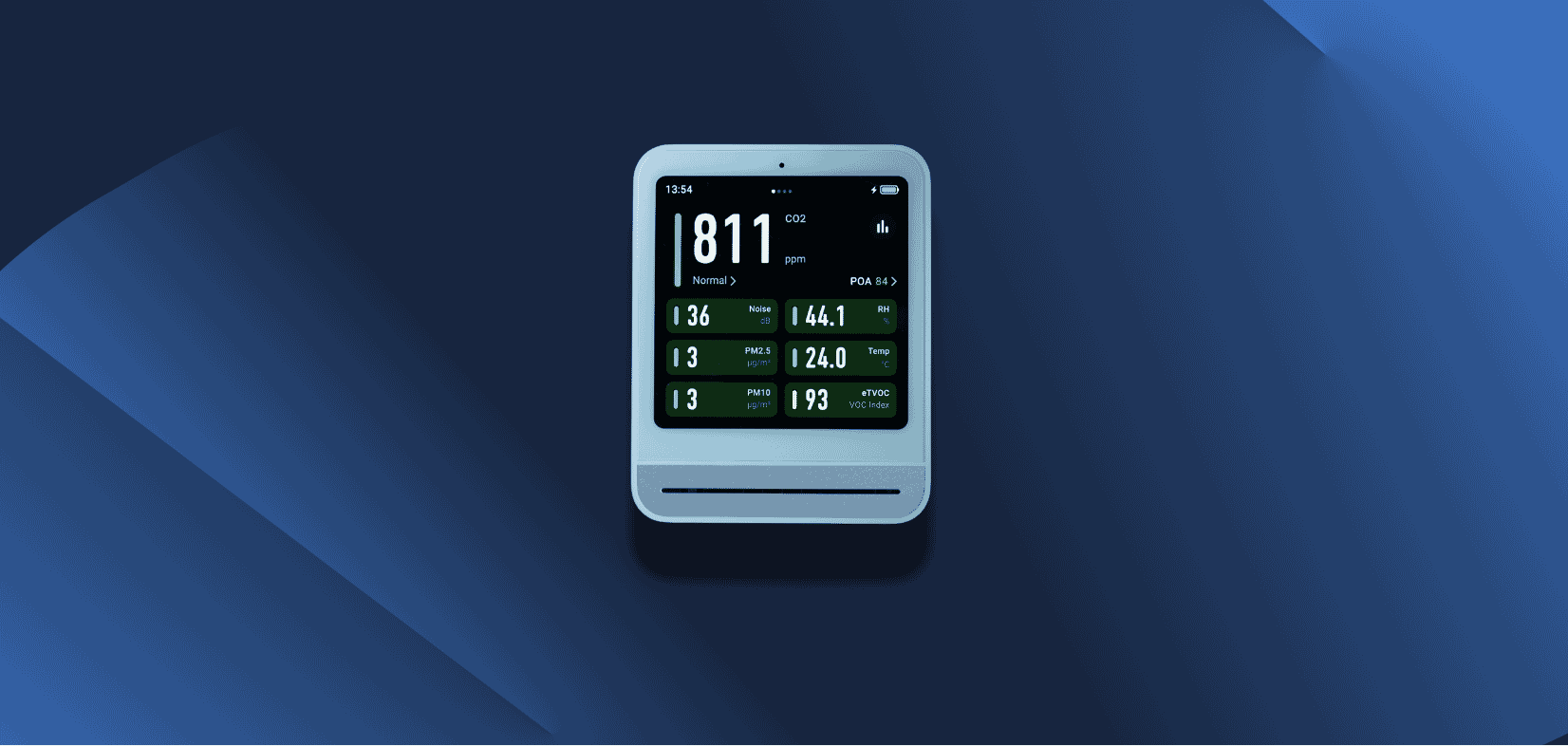
Starting May 29, 2026, buildings required to have a BACS must also measure and record indoor environmental quality not just energy use.
According to EN ISO 52120, this includes key parameters such as:
- Temperature (by zone or room)
- CO₂ levels
- Relative humidity
- Lighting levels (where applicable)
This also means your BACS needs to log and retain IEQ data, not just collect it in real time. And the more granular the data, the better.
What records must be logged and for how long?
At minimum, your building must retain 12 months of energy and IEQ data. However, in many member states, more historical trend data is preferred, especially for annual benchmarking or during audits.
To meet BACS compliance, inspectors will expect:
- Energy trend logs (per zone or system)
- Benchmarks comparing actual vs expected consumption
- Alarms with timestamps and follow-up actions
- Anomaly detection for unexpected consumption or performance drops
- Maintenance records related to energy systems
These logs must be exportable and interpretable. It’s not enough to say “we track this internally” you’ll need to show it clearly.
The BACS inspection checklist (what to prepare)
To pass a compliance inspection, building owners should ensure:
- Your BACS system is configured to log energy and IEQ data
- Logs are stored for at least 12 months
- Alarms and anomalies are linked to clear procedures
- Trend data is visualised and benchmarked
- You can export logs as part of your energy performance certificates process
- Your system supports indoor environmental quality monitoring across relevant zones
These requirements are based on EN 15232 and EN ISO 52120, both of which define the expected energy efficiency and functional capabilities of compliant BACS systems.
To make this even easier, we’ve bundled the key points into a ready-to-use checklist, plus technical guidance for your energy or facility team.
📥 Download the BACS Compliance Playbook
This free resource helps you get audit-ready across all your sites.
With stricter enforcement on the way, now is the time to prepare. And it starts with having the right data in place.
The Role of National Law: Country by Country breakdown
The Energy Performance of Buildings Directive sets the ambition but it’s up to member states to turn that into national law. This means that while the BACS requirements are technically the same across Europe, how and when they are enforced can differ from one country to the next.
For portfolio owners and property managers, this matters a lot. A building in Brussels might need to comply a year earlier than one in Flanders. A site in France might face different documentation or audit requirements than one in the Netherlands.
Here’s how four key markets currently implement BACS under their existing regulatory framework, based on the latest national measures and decrees.
🇧🇪 Belgium
- Regional approach: Separate rules for Flanders, Brussels, and Wallonia
- Deadline:
- Brussels: January 2025
- Flanders: January 2026
- Wallonia: Expected to align with Brussels
- Unique rule: Threshold systems where the sum of the capacities of hydraulically or refrigeration‑technically coupled heating and/or cooling equipment exceeds 290 kW (interpretation of EPBD guidance), with detailed implementation defined separately by Flanders, Brussels, and Wallonia
- Regulation:
- Flanders: Energiedecreet
- Brussels: COBRACE
- Wallonia : Décret PEB
🇫🇷 France
- National deadline: January 2025
- Earlier enforcement via Énergie-Climat legislation
- Decrees:
- Décret 2020-887 and 2023-259
- Scope: Aligned with EN ISO 52120, with national monitoring guidelines
- Focus: Early alignment with the EU’s revised energy performance goals
Practical impact: French commercial buildings over 290 kW must already be compliant or risk penalties.
🇩🇪 Germany
- Deadline: January 2026
- Law: §71a of the Gebäudeenergiegesetz (GEG)
- Focus: Clear definitions of system capabilities and cost optimal levels
- Audits: Emphasise trend reporting and energy performance benchmarking
- Fossil fuels: Shift away from fossil-based systems also integrated into national law
Practical impact: German audits focus heavily on documentation. Logs, benchmarking, and evidence of ongoing energy efficiency improvements are expected.
🇳🇱 Netherlands
- Deadline: January 2026
- Implementation: GACS under national energy legislation
- Scope: All technical building systems included, even when not hydraulically coupled
- Focus: Practical compliance and alignment with national building renovation plans
Practical impact: More buildings fall under BACS rules in the Netherlands due to broader interpretation of system scope. Retrofit planning is essential.
Why national law matters
Operating sites across borders? One BACS approach won't work everywhere. The revised energy performance directive leaves room for interpretation, and member states have made different choices. Some enforce stricter deadlines.
Others define system scope differently or embed BACS checks into existing certification schemes like energy performance certificates.
As noted in the Next Sense guide on BACS implementation, a tailored approach per country is the most effective way to avoid penalties, future-proof operations, and stay aligned with the EU’s broader energy strategy.
Do You Need to Replace Your BMS? No, here’s a Smarter Way
One of the biggest myths around BACS compliance is that every building needs a brand-new BMS.
You don't. For most commercial sites, that would be an expensive mistake. The Energy Performance of Buildings Directive focuses on outcomes: improved energy efficiency and better control over technical systems. It doesn't dictate specific hardware or vendors.
If your building already has some form of control system, you can build on it rather than start from scratch.
Let’s look at three common situations and what they mean for building owners.
1. No BMS yet
If your site has no building management system at all and your systems exceed the 70 or 290 kW thresholds. You’ll need to put the right infrastructure in place. But that doesn’t mean investing in a complex, high-end BMS that handles every system.
You can start with a targeted setup focused on:
- Energy monitoring
- Anomaly detection
- Data logging
- IEQ metrics
- Alarm triggers with response procedures
This is the foundation of compliance and it can be achieved using a flexible EMS or retrofit-compatible solution, rather than a traditional BMS.
2. Outdated BMS in place
Older BMS platforms often fall short when it comes to:
- Data retention
- Interoperability
- Benchmarking and alerts
- IEQ zone coverage
Outdated BMS setups can successfully be upgraded using external monitoring tools and connectors without replacing core systems, in other words retrofitting.
For example nanoGrid connects directly to metering infrastructure, sensors, or local controllers. It doesn’t require ripping out your legacy tech. Instead, it extends it bringing it in line with the minimum energy performance requirements under the directive.
3. Modern BMS already installed
If you have a recent BMS that logs energy data, triggers alarms, and supports IEQ monitoring, you’re likely halfway there. What matters is that:
- The system can retain trend data for over 12 months
- It supports benchmarking and reporting
- It enables actionable insights, not just data collection
If any of these pieces are missing, a lightweight add-on like nanoGrid can close the gap.
A retrofit-first mindset
Rather than replacing equipment, nanoGrid connect to what’s already there. We:
- Work with your technical building systems, not around them
- Log the right data for inspections and energy reporting
- Surface actionable issues via trend logs and anomaly detection
- Integrate with your maintenance platforms, so alarms lead to real outcomes
This approach reduces both complexity and cost. It ensures compliance aligns with your operational goals, especially during major renovations or when adding new buildings to your portfolio.
We've outlined exactly how this works in BMS vs nanoGrid, including how to stay compliant without locking over-the-top systems.
From Compliance to Value: Linking BACS to ESG & Cost Savings
BACS compliance does't need to start as a legal obligation. With the right setup, it becomes a performance tool.
It helps you cut emissions, reduce energy waste, and strengthen your ESG position. And with rising energy prices, the economic case gets stronger. Improving energy efficiency through BACS compliance directly impacts operational costs and makes decarbonization financially viable.
That's the real opportunity behind the Energy Performance of Buildings Directive. It's not just about meeting regulations. It's about using your centralised utility data to create value across your entire portfolio.
Go beyond the minimum
A compliant building automation and control system does more than tick boxes. It gives you the data to:
- Detect carbon emissions from inefficient assets
- Spot early signs of equipment failure through anomalies
- Benchmark energy performance across similar sites
- Track indoor air quality and respond before comfort dips
- Reduce consumption and shift maintenance from reactive to proactive
These insights are essential for owners targeting lower operational greenhouse gas emissions, improved asset valuation, and smarter capital planning.
The automation advantage
When your BACS system is combined with real-time alerts and cross-site benchmarking, you gain control over:
- What’s wasting energy
- When and where comfort drops
- How your buildings stack up against targets
- Which issues need immediate action
This moves you beyond compliance and into real energy strategy. With audit-ready data from nanoGrid, all of this becomes traceable and defensible. No pile of spreadsheets, no guesswork. Just clean, structured data from every asset across your entire portfolio.
Want to turn BACS into business value?
At nanoGrid, we help property teams centralise their data, automate reporting, build custom benchmarks, and cut waste before it hits the invoice.
Download our BACS playbook here. Want to learn more about our technology and approach? Book a demo or contact us with any questions you might have;
Frequently Asked Questions About the EPBD & BACS
What is the Energy Performance of Buildings Directive (EPBD)?
The Energy Performance of Buildings Directive is the EU’s main legal framework for reducing energy consumption in the building sector. It requires member states to improve the energy performance of buildings through stricter standards, smart automation systems like BACS, and measures to decarbonize heating and cooling. The goal is a fully zero-emission building stock by 2050.
What is a BACS and who must comply under the EPBD?
BACS stands for Building Automation and Control System. Under the revised EPBD, it becomes mandatory in non-residential buildings with:
- 290 kW or more heating/cooling capacity from 2026
- 70 kW or more capacity from 2030
BACS must monitor, control, and optimize energy use across technical building systems and support data logging, alarms, and IEQ tracking. If your systems are hydraulically coupled, their combined capacity determines if your building is in scope.
What are Energy Performance Certificates (EPCs) and why do they matter?
EPCs assess and rate the energy performance of buildings. Under the revised EPBD:
- EPCs follow a common EU-wide template with a scale from A (zero-emission buildings) to G (worst-performing buildings)
- They must be issued at more trigger points, including major renovations and rental contract renewals
- EPCs will be stored in national online databases to improve access and transparency
- Indicators now cover energy use, greenhouse gas emissions, and optionally charging points and indoor air quality
What is the deadline for member states to transpose the revised EPBD into national law?
All member states must integrate the revised EPBD into national law by 29 May 2026. Many countries are already implementing national decrees to prepare for enforcement. For example, France, Germany, the Netherlands, and Belgium have published or updated legislation that directly impacts BACS implementation and compliance timelines.
What are the renovation targets for non-residential buildings under the EPBD
To address the worst-performing buildings, member states must:
- Renovate the bottom 16% of non-residential buildings by 2030
- Reach the bottom 26% by 2033
These efforts are backed by minimum energy performance standards and form part of each country’s national building renovation plans.
Will fossil fuel systems still be allowed?
Not for long. From 2025, financial incentives for fossil fuel heating systems will be banned. By 2040, all fossil fuel systems in buildings are expected to be phased out entirely. This includes boilers that rely on oil or gas. Member states are required to outline how they will decarbonize heating and cooling systems, with a clear roadmap to shift toward renewable energy and low-emission technologies.
What else does the EPBD require from new and existing buildings?
- All new public buildings must be zero-emission by 2028
- All new buildings (residential and non-residential) must meet zero-emission standards by 2030
- New buildings must be designed to host rooftop solar installations
- Large existing non-residential buildings undergoing major renovation must integrate photovoltaic or solar thermal systems
- Non-residential buildings with more than five car parking spaces must include EV charging infrastructure
- Member states must also roll out Building Renovation Passports with tailored roadmaps for owners