IEQ Monitoring & Data Logging for BACS Compliance
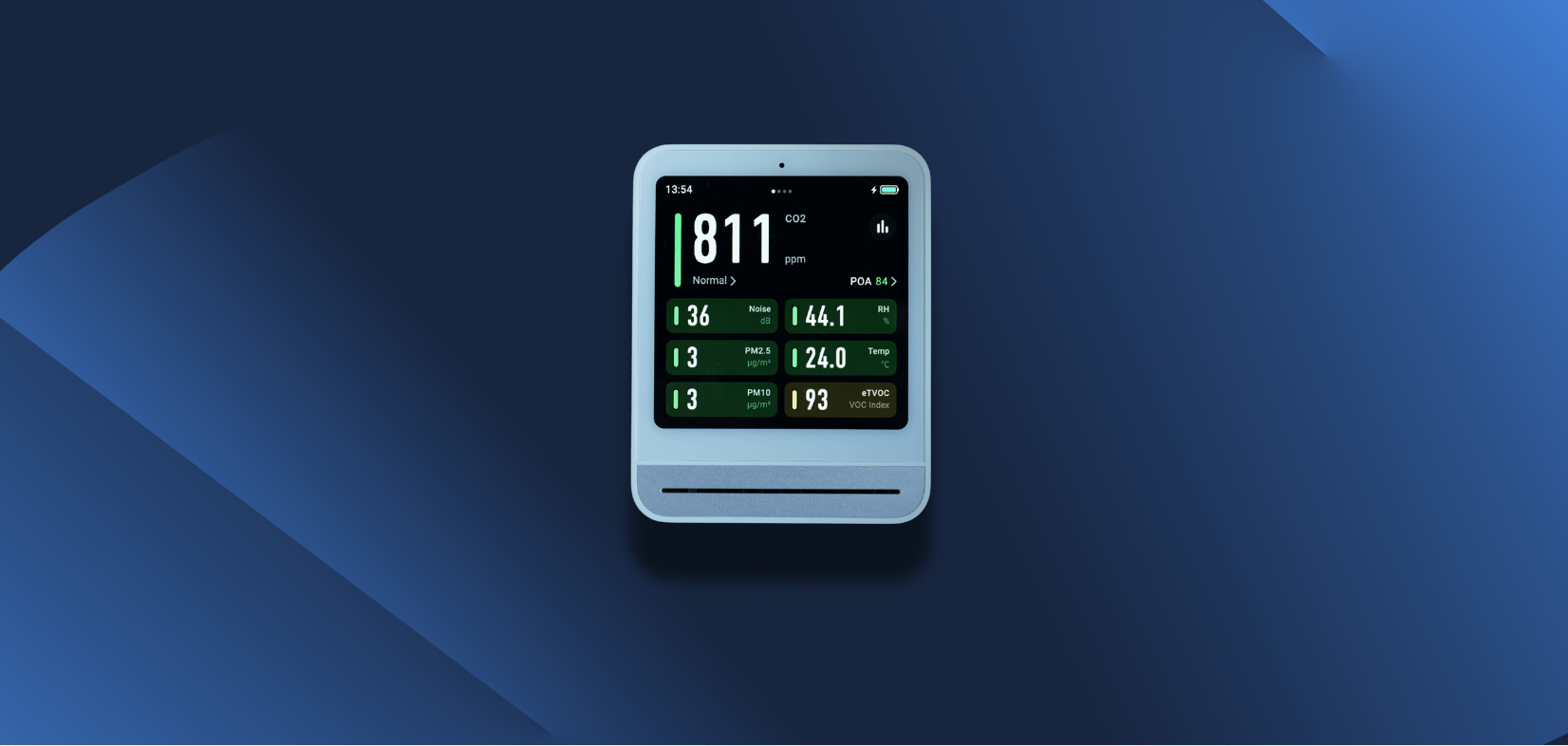
Most BACS audits don't fail because buildings lack technology. They fail because audit evidence is incomplete, inconsistent, or impossible to verify. Systems are installed, screens show values, but when the auditor asks for proof, the trail breaks.
Under the Energy Performance of Buildings Directive (EPBD), BACS inspections aren’t about what a system can do in theory. They’re about what can be demonstrated with reliable, traceable evidence over time: including how technical building systems are monitored, controlled, and documented (EPBD, 2024). Auditors are increasingly using BACS to verify that energy performance and indoor environment obligations are actually met in practice, not just specified on paper (eu.bac, 2024).
At the centre of that shift sit two main elements inspectors focus on: IEQ monitoring and credible data logging.
The requirements expect to see how indoor environment quality is monitored across representative zones, how measurements relate to system control, and how results are retained as audit evidence.
A dashboard alone doesn't meet that standard. Screens don't replace records. Claims don't replace evidence.
This article explains what auditors actually expect, not just sensors and software, but structured audit evidence that stands up to inspection without last-minute preparation.
Why IEQ Monitoring and Data Logs Decide the Outcome
From an auditor’s perspective, compliance isn’t about having the right system. It’s about showing the right proof.
If your building automation system can’t demonstrate how it maintains temperature, CO₂
Dashboards don't count as audit evidence obtained
Real-time dashboards help you operate and analyze your building. But on their own they don’t meet audit expectations, because they don’t provide permanent, verifiable records.
A screen showing today’s CO₂ levels and energy consumption isn’t sufficient. Audit evidence must allow the audit team to go back in time, verify trends, and assess whether internal control procedures and BACS functions work as claimed which means exportable logs and reports, not just live screen
IEQ connects performance to risk
If your system doesn’t monitor temperature, air quality, and occupancy in a way that maps to your zoning and floorplan, you’re exposed. Auditors can’t assume one room reflects the whole building. They look for representative coverage and consistent data logging to back it up.
Bottom line:
- Dashboards alone = not audit-ready
- Logs covering less than 12 months usually signal a compliance gap
- Undocumented sensor placement = incomplete evidence
· Non-exportable data = incomplete PIF
· Incomplete sensor coverage or data undermines the completeness of audit evidence, which is essential for a fair representation of the building's performance.
What IEQ Monitoring Means Under EPBD BACS
IEQ, Indoor Environment Quality, is more than a comfort metric. Under EPBD BACS, it's a critical component of how your building's performance is measured and validated.
IEQ refers to the overall quality of the indoor environment: air, temperature, humidity, lighting, and noise. In BACS audits, the focus is on how these conditions are monitored, logged, and controlled in relation to HVAC, ventilation, and lighting systems.
The IEQ monitoring logic under EPBD BACS is closely aligned with EN ISO 52120, which outlines how building automation systems should supervise and improve conditions across zones. IEQ data must be collected, stored, traceable, and linked to control actions so that auditors can see both conditions and the system response over time.
Auditors expect to see:
· Temperature and humidity tracking per zone
· CO2 levels or air quality indicators in occupied areas
· Logs reflecting when and how systems responded to deviations
· Evidence of alarms, overrides, or manual interventions
· Data continuity over at least 12 months, with longer histories (over 5 years) preferred where available for analysis and benchmarking
If a system claims to control ventilation but there's no traceable IEQ data showing outcomes over time, the auditor has no basis to issue a positive opinion.
IEQ Sensor Coverage: What Auditors Expect
Having sensors isn’t enough. What matters is where they are, what they measure, and whether the data holds up as verifiable evidence.
Internal evidence generated by the building's own sensors and systems is considered reliable when internal controls are effective, but it must be supported by proper documentation and traceability.
Coverage requirements
Auditors expect IEQ monitoring across representative zones:
- All key floor levels, especially high-occupancy areas
- Spaces with different use types (offices, meeting rooms, break areas)
- Zones that reflect actual control logic
Common sensor types auditors ask for:
- Temperature sensors in each controlled zone
- CO₂ or VOC sensors for indoor air quality
- Humidity sensors in spaces with variable moisture
- Motion/occupancy detectors when used for scheduling
Placement mistakes that raise audit risk
- Monitoring only equipment rooms, not occupied zones
- Sensors not linked to HVAC system control
- Missing floor levels in multi-storey buildings
- No documentation showing sensor roles and coverage
- Uncalibrated sensors without maintenance records
Even high-quality sensors won't help if placement or traceability is weak. Sensors must connect system control to environment quality in a way that's transparent, documented, and audit-ready.
Data Logging: The Memory of Your BACS
If IEQ sensors are the eyes of your building automation system, data logging is the memory. Effective data logging can lead to improved audit outcomes and operational efficiency by providing reliable evidence and supporting better management decisions. It proves your building performs as claimed over time. Data logging in building automation systems also helps improve occupant comfort by adjusting environmental conditions based on occupancy levels.
What counts as compliant logging?
Data logging is the automated, continuous recording of system data:
- Temperature, humidity, and CO₂ across zones
- HVAC responses and setpoint changes
- Occupancy patterns
- System alarms and overrides
- Energy consumption
Web-based data loggers allow users to view data remotely and often feature real-time monitoring capabilities, which supports compliance and audit readiness.
Minimum expectations:
- Interval: 15 minutes or less
- Retention: At least 12 months in-system
- Export: historic data available for audit review
Real-time data alone isn’t enough, it disappears. Dashboards show the present. Audits evaluate the past.
Structure and traceability matter
Even correct data must be structured:
- Clear timestamps
- Zone identifiers
- Sensor types and system relevance
- Logs linked to alerts and system responses
Logs must be retrievable and readable during the audit. Incorporating data from external sources can further increase the reliability and completeness of audit evidence. Without structure, no amount of real-time monitoring satisfies the auditor.
Your Audit-Ready Compliance File
Under EPBD BACS, inspectors expect a structured compliance file that can be easily retrieved during an audit. At nanoGrid, we refer to this internally as a PIF (Project or Performance Information File). This file brings all required evidence together and shows that the organization operates within regulatory boundaries.
What belongs in the file?
- System overview: scope, monitored zones, BACS layer coverage
- Sensor map: floorplans showing placement and system links
- + 12 months of logged data: structured by time, zone, and system
- Alarm and override records: with timestamps and follow-up actions
- Exportable benchmarking reports
- Prior inspection reports with resolved issues
- Maintenance and software update logs
- Internal control procedures and roles
Including additional evidence in the PIF can help reduce audit risk and improve the quality and reliability of the audit evidence.
Dashboards support but don't replace documentation
Dashboards help operations teams spot anomalies. The quality and structure of audit evidence directly affect the auditor's decision-making process and final conclusions. But auditors need permanence, structure, and evidence obtained — not just displayed.
Dashboards = daily interface. Compliance file= permanent record.
Modern BACS compliance requires both.
Portfolio Consistency: Scaling Evidence Across Buildings
For multi-site portfolios, the real challenge isn’t sensor placement, it’s consistency. Auditors assess how your systems perform across your entire portfolio.
Standardizing building automation systems and data logging across a portfolio can lead to significant cost savings through improved operational efficiency and reduced utility expenses.
Why consistency matters
If one building logs 12 months of CO₂ data and another keeps nothing, that inconsistency becomes a red flag. It complicates audit procedures, ESG reporting, and energy performance certificates.
Standardise across sites
You don't need identical hardware. But you need a shared approach to:
- IEQ monitoring: what's measured, where, how often
- Data logging: standard formats, intervals, retention
- Audit packs: PIF structure and contents
- Accountability: who keeps records current
The risk of fragmented systems
Most portfolios rely on local BMS platforms operated separately. Logs get overwritten. Sensors go uncalibrated. Formats vary by site. There's no central control and no way to assess risk across assets.
To fix this, you need a central platform that connects local systems, pulls in the right data, and presents it in a structured, comparable way.
How nanoGrid Supports BACS: Audit-Ready IEQ and Data Logging
Most systems weren’t designed to satisfy EPBD requirements. They were built for operations not audit evidence.
nanoGrid doesn’t replace your local building automation systems. We connect to them. Then we handle what they usually miss: centralising data, structuring logs, and keeping your entire portfolio audit-ready. While having a structured approach supports auditors in exercising professional skepticism when evaluating the sufficiency and reliability of audit evidence.
From sensors to centralised platform
nanoGrid connects directly to your existing sensors, meters, and control systems:
- Continuously log IEQ and energy data per zone, floor, and site
- Store + 12 months of retrievable audit evidence
- Visualise data in dashboards linked to structured databases
- Track alarms, overrides, and benchmarks linked to outcomes
- Meet EN ISO 52120 and EN 15232 expectations
Why this reduces inspection risk
Manual audit prep is one of the biggest hidden costs in compliance. Teams scramble to extract logs, explain sensor gaps, and build documentation from scratch.
nanoGrid automates that process:
- Reliable audit trails for every monitored meter
- Standardised PIFs (Post Intervention Files) across all sites
- Clear visibility of gaps before the auditor sees them
- Centralised and accurate data for ESG reporting and EPC submissions
Ready to stay ahead of inspections without overhauling your systems?
📥 Download the BACS Compliance Playbook for full checklists, deeper insights, and rollout guidance. Build an audit-ready, data-first evidence layer with nanoGrid. Book a meeting to see how it works across your portfolio.