LEED Certification in Europe: How the Scoring Works and Why Energy Data Determines Your Rating
What started as a North American green building certification has become the world’s most recognised sustainability standard for green buildings. European portfolios can no longer ignore it.
If you manage commercial buildings across multiple markets, you've likely encountered tenants or investors who expect LEED certification alongside BREEAM certification. Global occupiers want their European green buildings held to the same LEED rating system standards as their US and Asian assets. That creates a real problem: LEED is built on ASHRAE standards, not European metering protocols. Your data infrastructure needs to bridge that gap.
This article explains how the LEED rating system works, what each level requires, and why energy data is the single biggest factor separating a LEED Gold certification from LEED Platinum certification. If you're comparing frameworks, our BREEAM vs LEED guide covers the key differences.
What Is LEED Certification?
LEED stands for Leadership in Energy and Environmental Design. It is the world's most widely used, third-party verified green building rating system. Developed by the US Green Building Council (USGBC), LEED provides a framework for healthy, efficient, and cost saving green buildings that has propelled the green building industry forward for over two decades.
The LEED certification process is managed by the Green Business Certification Inc. (GBCI). The Green Building Council sets the standards. Green Business Certification handles the assessment and awards LEED credentials to both buildings and professionals. LEED certification applies to nearly any building project: new construction projects, major renovations, existing buildings, commercial interiors, and even neighborhood development at community scale.
The numbers speak for themselves. LEED certified buildings showcase a 25% reduction in energy consumption and 34% lower CO2 emissions compared to non LEED certified buildings. They see 4% lower vacancy rates. They command rental rates 15 to 18% higher than comparable properties. For green buildings in European markets, LEED certification is shifting from a differentiator to a baseline expectation.
The Four LEED Certification Levels
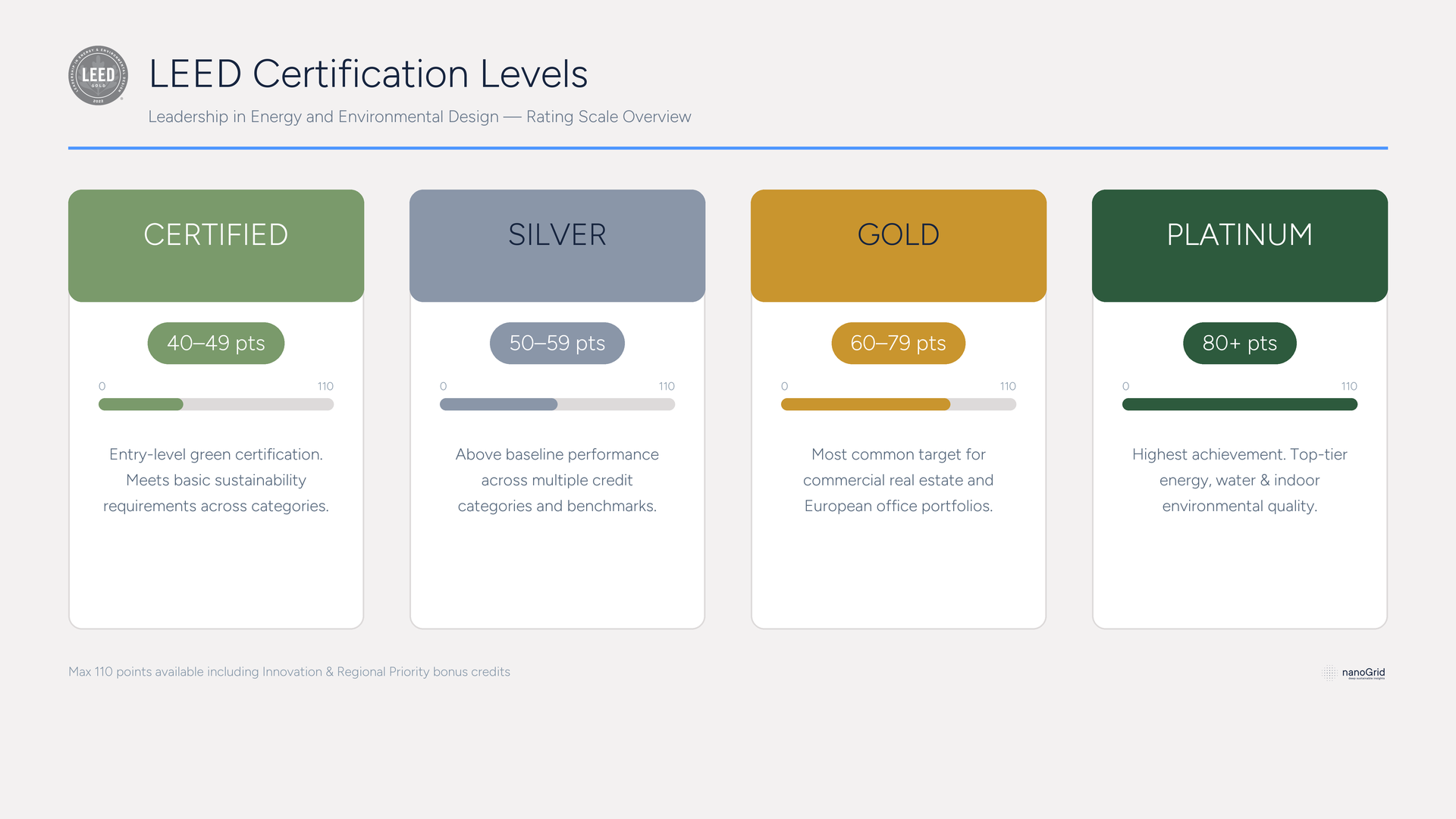
The LEED rating system operates on a point system. A maximum of 110 points can be awarded: 100 base points plus 10 bonus points for innovation and regional priority. The more points your building project earns, the higher the LEED rating.
From Certified to Platinum
LEED certification is structured across four levels, each representing a higher standard of sustainability and environmental responsibility:
- Certified: 40 to 49 points. The entry level. Demonstrates green building principles and baseline sustainable practices across the building project.
- Silver: 50 to 59 points. Shows meaningful commitment to sustainable building design and energy efficiency.
- Gold: 60 to 79 points. The most common target for commercial buildings and LEED certified office buildings. Requires strong performance across multiple credit categories.
- Platinum: 80 points or more. The highest LEED rating. Reserved for green buildings that represent the leading edge of environmental design. Under LEED v5, LEED Platinum requires full electrification.
To achieve LEED certification at any level, project teams must meet prerequisites and earn points through sustainable practices. The point system rewards measurable outcomes, not intentions. Every LEED certified building must prove its performance.
Different LEED Rating Systems: Which Standard Fits Your Project?
LEED has different LEED rating systems tailored to specific building types and phases. Choosing the right one is the first step toward pursuing LEED certification.
New Construction and Major Renovations (BD C)
The BD C rating system covers new construction, major renovations, and core-and-shell developments. Building design and construction BD C is the most common entry point for LEED projects across European markets. It evaluates green building design, construction BD C practices, and sustainable site development.
Interior Design and Construction (ID C)
Interior design and construction covers commercial interiors and tenant fit-outs. It applies where the scope is limited to interior design and commercial interiors. For European landlords with multi-tenant assets, interior design and construction certification allows occupiers to certify their space independently.
Operations and Maintenance (O M)
Operations and maintenance focuses on existing buildings and building operations. This is where LEED connects to ongoing building performance data or breeam in-use. Building operations and maintenance evaluates energy efficiency, water use, waste management, and indoor environmental quality in operational assets. For portfolios with existing buildings, this pathway offers LEED certification without new construction.
Neighborhood Development and Other Standards
Neighborhood development covers land development projects at community scale, including new land development projects and redevelopment projects. LEED also offers standards for homes and residential communities. These LEED rating systems cover virtually every building type across the built environment.
What's Changing with LEED v5?
The final version of LEED v5 was released in April 2025. It is the most significant update to the rating system in years. Roughly 50% of available points under the latest version are now tied to decarbonisation strategies. Every project under LEED v5 must complete carbon, climate resilience, and environmental and human health assessments as prerequisites.
LEED v5 emphasises a data-driven approach to building operations by identifying performance-based credits. For European projects, this means the demand for verified, continuous energy data will only increase. LEED v5 expresses three global goals: climate action, quality of life, and conservation. The green building industry is moving fast.
LEED Credit Categories: Where Points Are Won and Lost
LEED certified projects earn points across defined credit categories. Each targets a specific dimension of green building practices and sustainable building materials use. Applicants pursuing LEED certification must submit thorough documentation to demonstrate compliance.
Energy and Atmosphere: The Category That Decides Your Rating
Energy and Atmosphere is the largest credit category in the LEED framework. It evaluates energy efficiency, energy consumption reduction, renewable energy adoption, and ongoing commissioning. For project teams targeting Gold or LEED Platinum, this category is decisive. Advanced metering, real-time monitoring, and demand-response evidence all contribute. You can explore the full credit structure through the LEED credit library on the USGBC website.
Indoor Environmental Quality
Indoor environmental quality measures conditions that affect occupant health and comfort. Indoor air quality, natural light, indoor air quality monitoring, thermal performance, and acoustics all factor in. LEED prioritises indoor environmental quality because it directly impacts environmental and human health. For LEED buildings, this is a key differentiator in tenant satisfaction and retention.
Sites, Water, Materials, and Regional Priority
Sustainable site development evaluates how the building project interacts with its surroundings. Water efficiency targets reduced consumption. Materials and Resources encourages sustainable building materials and recycled materials. Regional priority credits reward LEED buildings that address locally significant environmental issues.
The LEED rating is the sum of performance across all categories. Project teams set goals, collaborate on analysis, and document everything. No single shortcut exists. Green buildings earn their score through verified results.
LEED Credentials: Who Guides the Certification Process?
Beyond building certification, LEED offers professional LEED credentials managed by Green Business Certification Inc. under the Green Building Council framework. Two credentials matter most.
The LEED Green Associate credential is the foundation-level LEED accreditation. It demonstrates broad understanding of green building practices and the rating system. The LEED Green Associate exam tests knowledge across all credit categories. For professionals new to the field, LEED Green Associate is the standard entry point. Passing the LEED Green Associate exam requires familiarity with building design and construction through to building operations.
LEED AP is the advanced credential. A LEED Accredited Professional holds specialised expertise in a specific standard, such as BD C or O M. LEED AP professionals guide project teams through the assessment. For European organisations, working with a LEED AP or LEED Green Associate ensures your team knows what the framework demands. Both LEED credentials support certified projects throughout their life cycle. LEED accreditation at either level signals serious commitment to sustainable practices.
Can You Get LEED Certified in Europe?
Yes. LEED certification in energy and environmental design is recognised across over 180 countries. European LEED buildings span logistics, offices, retail, and mixed-use green buildings. Certified projects are growing in number as global occupiers demand consistent green building certification for their portfolios of green buildings worldwide.
The practical challenge? LEED is designed around ASHRAE standards from North America. European buildings use local metering protocols like M-Bus and Modbus. Your data infrastructure needs to translate between what your meters capture and what the LEED rating system requires. Without that bridge, LEED projects in Europe stall at the evidence stage.
What Is the Difference Between LEED Gold and LEED Platinum?
Gold certification requires 60 to 79 points. Platinum demands 80 or more. The gap sounds small. It is not. The jump requires excellence in Energy and Atmosphere, strong indoor environmental quality scores, and documented proof of sustainable practices across every category.
Under LEED v5, Platinum also requires full electrification. For European LEED buildings on mixed-fuel systems, that raises the bar significantly. Building analytics and continuous performance data become essential.
What Energy Monitoring Does LEED Require?
The Protocol Gap That Stalls European LEED Projects
Energy and Atmosphere is the largest credit category. To score Gold or Platinum, you need advanced metering at system level. Verified energy use data. Ongoing commissioning evidence. Real-time monitoring that proves your green buildings perform as designed.
For European portfolios, the challenge is protocol translation. LEED expects data formatted around ASHRAE baselines. Your meters speak M-Bus, Modbus, pulse output. Most green buildings in Europe pursuing LEED fail not because they aren't efficient, but because the data can't be verified in the format the rating system requires.
How nanoGrid Bridges That Gap
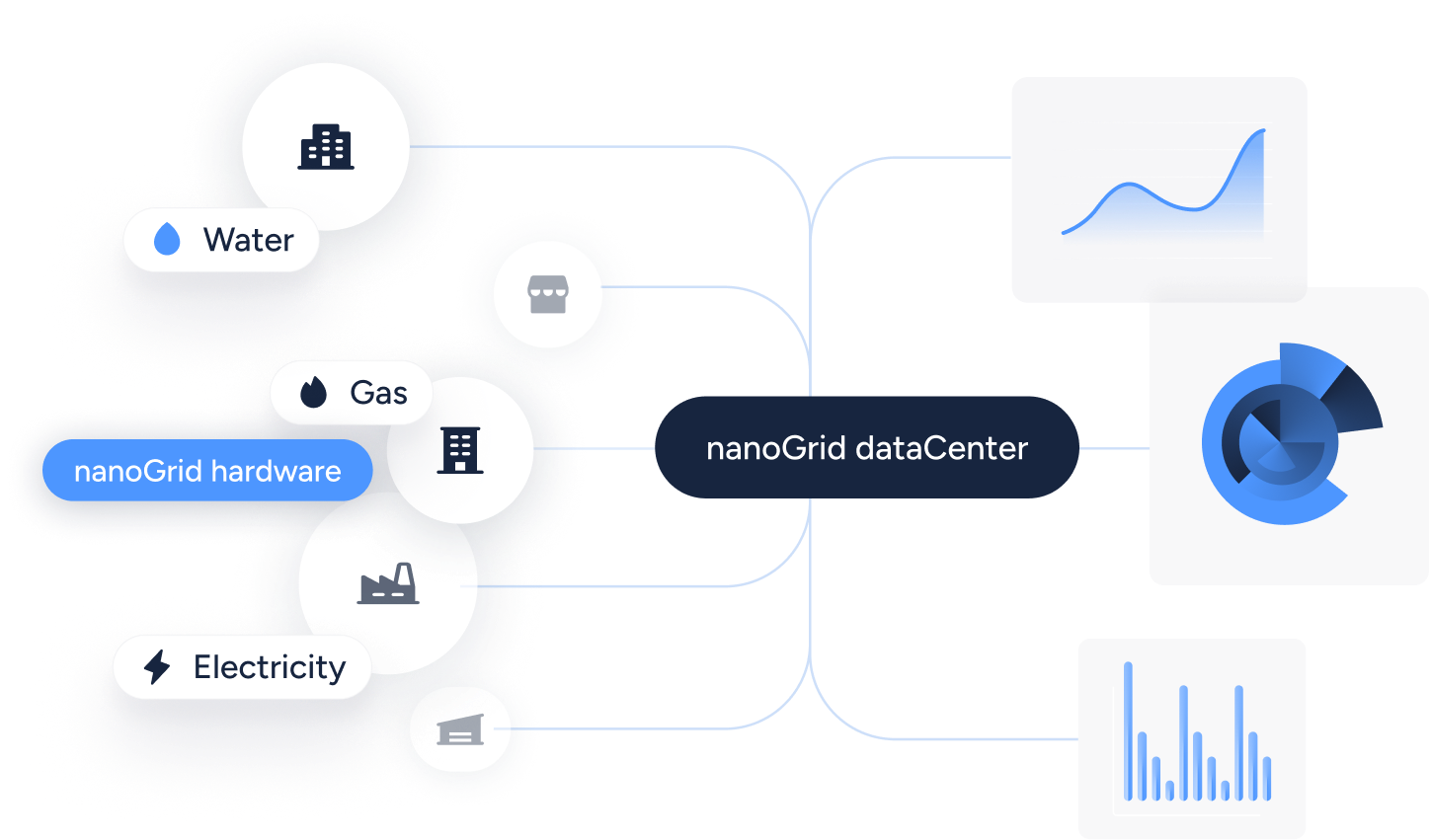
nanoGrid solves this at the infrastructure level. Our hardware sits physically inside your buildings, on every relevant meter, capturing real-time energy monitoring data across all protocols. nanoScope reads legacy meters without replacement. Data flows through our meter-to-cloud infrastructure and out via our API-first architecture in whatever format your LEED submission, IoT energy monitoring platform, or ESG tool requires.
One hardware deployment. Multiple frameworks. Whether your portfolio reports to LEED, GRESB, or both, nanoGrid delivers verified, audit-ready data at portfolio scale.
LEED Certification Rewards What You Can Verify
The LEED green building certification is the world's most recognised for good reason. It sets clear standards for green buildings and rewards verified, measurable results. LEED certified buildings drive sustainability improvements, attract tenants, and provide tangible ESG evidence for investors across the world.
For European portfolios, the challenge is not ambition. It's data. Achieving LEED certification at Gold or Platinum demands the kind of continuous, traceable energy data that most existing buildings don't produce on their own.
nanoGrid closes that gap. From legacy meters to real-time dashboards, our hardware and software deliver compliance and sustainability reporting across your entire portfolio.
Ready to see what traceable utility data looks like for your LEED projects? Book a demo and find out.