The evolution of AI energy management systems: from manual to auto

AI energy management is transforming how organizations monitor, control, and optimize their energy consumption. What once required manual meter readings and monthly utility bills now happens automatically, in real time, across entire portfolios (IEA, 2025).
But this shift didn't happen overnight.
This article traces that evolution, from the manual era through early digital tools to today's intelligent platforms and explains what AI energy management actually does, where it delivers measurable impact, and why quality data remains the foundation of every successful deployment.
A Brief History of Energy Management Systems
Before AI energy management systems and predictive analytics entered the scene, energy monitoring was a largely manual effort.
In the early days of facility and energy management, most decisions were based on delayed or incomplete data. Teams relied on manual meter readings, handwritten logs, and monthly utility invoices to estimate energy consumption. This approach made it nearly impossible to identify inefficiencies in real time or to act on hidden energy waste.
From clipboard to cloud
Throughout the 1990s and early 2000s, the energy sector began modernising its infrastructure. Spreadsheets replaced notepads. Building operators started using early energy management systems (EMS) to track performance trends and compare energy usage between assets. These first digital systems, however, remained siloed: each facility operated independently, with data stored locally and shared inconsistently across teams.
Early systems: Isolated BMS and fragmented tools
Early Building Management Systems (BMS) introduced automation to heating, ventilation, and lighting controls, but they focused on comfort rather than carbon. They gathered some operational data, but lacked transparency into energy consumption at a granular level. Without integration across utilities: electricity, water, heat, and gas. Operators could optimise a system in one building while remaining blind to waste in another.
Data was trapped within devices, protocols, and formats that couldn’t communicate. As a result, even digital energy management systems were still limited to reactive insights.
The shift toward digital: APIs and SaaS platforms
The real transformation came with cloud computing and the rise of Software-as-a-Service (SaaS). Centralised dashboards replaced local installations. APIs enabled data sharing across buildings and systems. Facility and sustainability teams could now monitor multiple sites from a single interface: tracking consumption, emissions, and performance metrics in near real time.
This shift from manual energy management to cloud-based systems laid the foundation for what came next: automation, predictive intelligence, and the age of AI-driven energy optimisation.
The Rise of AI in Energy Management
Over the past decade, AI energy management has shifted from a futuristic concept to a competitive necessity. The combination of artificial intelligence, advanced sensor technology, and ESG demands has redefined how energy is monitored, managed, and optimized across sectors.
What changed: data explosion, sensor tech, and ESG pressure
Today’s energy managers are no longer go for information: they’re overloaded with it. Buildings now generate millions of data points daily from HVAC runtimes to circuit-level electricity use. Smart meters and IoT devices capture it all.
This data explosion, combined with rising energy costs and stricter compliance obligations (CSRD, GRESB, LEED), created the perfect conditions for AI energy management systems to improve and flourish.
AI-driven solutions process real-time energy streams and predict future usage automatically. No manual analysis, no delays, just continuous learning that drives smarter decisions.
How AI and machine learning changed energy optimization
Modern artificial intelligence applies machine learning algorithms to detect patterns in your historical and real-time energy consumption. Instead of waiting for monthly utility bills, AI systems forecast usage, flag anomalies, and suggest adjustments to reduce waste.
This is a leap from automation to intelligence.
AI doesn’t just turn systems on or off, it understands context:
- When does the HVAC consume most?
- Which zones consistently use more lighting than expected?
- Where can energy usage be shifted to avoid peak tariffs?
By answering these questions in real time, AI energy management unlocks a new level of energy efficiency and operational control.
Where AI makes a measurable difference today
AI energy optimization is already paying off across industries:
- Commercial real estate: AI forecasts occupancy trends and aligns HVAC runtimes accordingly.
- Retail and logistics: Predictive maintenance flags equipment before it fails, avoiding costly downtime and energy spikes.
- Manufacturing: Machine learning models minimize load during peak hours while maintaining throughput.
- Public infrastructure: AI smooths out district heating and grid loads, reducing reliance on fossil backups.
Even renewable energy performance is improved, with AI predicting solar production or wind availability and aligning energy storage or load balancing in response.
What Is AI Energy Management?
AI energy management refers to the use of artificial intelligence: specifically, machine learning algorithms and sensor data streams, to track, analyze, and optimize energy consumption in real time.
It goes further than traditional EMS tools by introducing autonomy and predictive intelligence, reducing the need for manual adjustments and making energy strategies proactive instead of reactive.
The core of AI energy: real-time data, sensors, and algorithms
AI systems ingest massive volumes of sensor data from meters, HVAC units, lighting systems, industrial equipment, and building automation platforms. These systems don’t just collect data. They learn from it.
Here’s what powers AI energy solutions:
- Sensor data: Captures electricity, gas, water, temperature, occupancy, and equipment-level performance.
- Real-time data streams: Allow for instant feedback loops and micro-adjustments.
- Predictive analytics: Forecast energy consumption based on usage trends, weather, or production schedules.
- AI algorithms: Detect patterns, anomalies, and opportunities for load shifting, asset tuning, or fault prediction.
Combined, these components give facility managers, energy teams, and sustainability leads the ability to optimize energy consumption continuously without waiting for monthly bills or spreadsheets.
How AI Improves Energy Efficiency and Reduces Costs
AI energy management is more than just automation: it’s about continuous, autonomous improvement. By combining real-time insights with predictive models, AI delivers unmatched energy efficiency, cost control, and emissions reduction at scale.
Smarter forecasting = smarter operations
At the heart of every AI energy efficiency strategy lies one crucial strength: prediction.
Using real-time data and historical usage trends, AI models can:
- Forecast energy demand by time of day, occupancy level, or weather conditions.
- Anticipate grid pressure or price spikes, then shift non-essential loads accordingly.
- Balance energy usage across assets or sites to prevent unnecessary peaks.
Reducing energy waste through dynamic optimisation
In traditional setups, systems run based on static schedules even when conditions change. That’s where AI-driven solutions rewrite the playbook.
Here’s how they optimize:
- HVAC systems adjust dynamically to room usage, external temperature, or CO₂ levels.
- Lighting systems dim, brighten, or shut down based on daylight, motion, and real-time occupancy.
- Processes in manufacturing or warehousing adapt in real time to reduce standby loads and energy waste.
The result? Lower energy costs, better operational efficiency, and fewer hours of avoidable consumption.
Real impact on emissions and cost control
Because AI optimizes continuously, the energy savings stack up fast especially across large portfolios.
AI energy platforms enable:
- Peak load shifting to avoid high-tariff periods.
- Reduced greenhouse gas emissions through lower usage and smart scheduling.
- Consistent cost savings through avoided waste, optimized runtime, and better control over utility contracts.
By aligning operations with predicted demand and renewable availability, companies reduce their carbon footprint without compromising comfort or performance.

From energy monitoring to prediction: What AI does better
For years, energy monitoring was about hindsight. Meters logged usage. Managers checked energy bills. Adjustments were made, usually too late.
But AI energy management flips the model from reactive to predictive, using real-time insights and historical data to stay ahead of the curve.
From looking back to looking forward
Traditional systems answer:
“What happened?”
AI energy platforms ask:
“What’s about to happen and how do we prevent waste or failure before it costs us?”
This shift is powered by predictive analytics. AI ingests thousands of data points from smart meters, HVAC systems, lighting controls, and sensor data then learns patterns over time. From there, it identifies anomalies, forecasts demand, and even flags when equipment is likely to fail.
Fewer surprises, more uptime
Let’s take predictive maintenance. With traditional systems, teams often react after the damage is done whether it’s a broken chiller, failed fan, or energy spike. AI helps detect subtle signs of trouble in advance:
- Irregular motor loads
- Unusual runtimes
- Heating or cooling drifts across zones
These insights are surfaced automatically, reducing unplanned downtime and avoiding costly overuse.
Better procurement and smarter energy decisions
AI doesn’t just optimize buildings it improves business decisions:
- Historical usage data helps teams negotiate smarter contracts and choose the right tariff models.
- Predictive analytics allow better budgeting by showing future load curves not just past invoices.
- Teams gain real-time insights into where inefficiencies lie and which sites or tenants need attention first.
Real-World AI energy examples
AI isn’t some future promise.
It’s already driving real-world results across sectors from industrial facilities to commercial real estate portfolios and grid operators. Let’s go over some short use cases.
Manufacturing: Smarter energy at every stage
In manufacturing plants, AI systems monitor every part of production from HVAC systems to robotic equipment. Algorithms detect abnormal consumption patterns, predict peak usage, and schedule energy-intensive processes during off-peak hours. This not only reduces energy costs but also extends equipment lifespan.
In facilities that run continuous operations, AI-driven maintenance scheduling helps prevent breakdowns, avoiding costly halts and enabling more efficient energy production during high-demand periods.
Real estate: From buildings to portfolios
For building owners and facility managers, AI energy management enhances traditional BMS setups. Systems analyze real-time data from HVAC, lighting, occupancy sensors, and even weather inputs to auto-adjust setpoints and reduce idle loads. In portfolios with hundreds of sites, AI compares buildings to detect underperformers and surface actionable insights.
When combined with tools like nanoGrid’s nanoScope , the result is full visibility into all utilities not just electricity. Facility teams can finally match energy consumption to use zones, tenants, and time.
Utilities and energy companies: Forecasting and trading
Utility providers and renewable energy sources like wind and solar face a unique challenge: unpredictable generation. AI solves this through predictive analytics and pattern recognition. For instance:
- Wind farms use AI to predict wind patterns and align turbine operations (ECMWF AIFS operational AI forecasts, 2025).
- Solar farms combine satellite imaging and weather data to estimate cloud cover and forecast output (National Grid ESO & Open Climate Fix, 2024).
- Energy trading platforms use AI to simulate market behavior, optimize asset dispatch, and reduce exposure to price volatility (DRL bidding research, 2024)
This forecasting capability enhances renewable energy integration into the grid balancing variability with smart load shifting and AI-powered energy storage optimization.
Challenges of AI in Energy Management
While the promise of AI energy management is clear, its path to mainstream adoption comes with real challenges. For organizations investing in smarter infrastructure, understanding these barriers is essential to unlocking long-term value.
Data quality remains a significant challenge
The foundation of every AI system is data. But AI’s ability to forecast, automate, or optimize depends entirely on what it’s fed.
Incomplete, delayed, or siloed data leads to skewed outcomes and can result in costly energy wastage, false alerts, or missed efficiency opportunities.
This is especially critical in energy infrastructure, where inconsistencies in utility readings or faulty meter data can throw off optimization models.
That’s why clean, traceable utility data matters more than ever. Platforms like nanoGrid provide time-stamped, audit-ready consumption data.
High initial investment and integration complexity
Deploying AI-driven energy management platforms across large portfolios or aging infrastructure isn’t a plug-and-play process. Most solutions require:
- Substantial upfront costs in sensors, software, and edge devices.
- Integration with existing energy management systems, building management systems, or utility meters.
- Organizational buy-in and change management to support automation.
Talent shortages and the need for human oversight
AI energy platforms don’t manage themselves. Skilled energy managers, analysts, and operators are still essential to interpret outputs, adjust models, and make strategic decisions. But here’s the problem: AI and energy talent are in short supply.
The energy sector is facing a skills gap, especially around data science, predictive analytics, and AI strategy. Many companies lack internal capacity to extract full value from their tools.
What the Future Looks Like: AI and the Sustainable Energy Transition
As global pressure mounts to meet net-zero targets, AI is fast becoming a cornerstone of the sustainable energy future.
For energy companies, utilities, and large enterprises alike, the challenge isn’t just cutting energy consumption. It’s making sure every decision, every watt, and every report is traceable, optimized, and aligned with long-term goals.
That’s where AI solutions come in.
Real-time control for cleaner, smarter grids
Tomorrow’s energy systems won’t just report, they’ll respond. In real time.
AI-powered grid management tools are already helping energy providers balance renewable variability, forecast demand shifts, and stabilize loads across cities and regions. When paired with real-time utility data from platforms like nanoGrid, this unlocks new possibilities in:
- Demand response: AI reacts instantly to price signals, occupancy, or weather.
- Energy distribution: Load balancing between solar, wind, and battery assets.
- ESG scoring and reporting: Automated, audit-ready sustainability metrics.
This synergy: AI + IoT + Utility Data, forms the brain, sensors, and nervous system of next-gen energy management.
Final Thoughts: AI holds great promise, but data comes first
Energy management has come a long way.
What started as manual meter readings and static spreadsheets has evolved into AI-driven energy optimization. Today, advanced AI systems can predict equipment failures, balance supply and demand, and help companies cut energy costs while shrinking their carbon footprint.
But here’s the truth: AI is only as good as the data it receives.
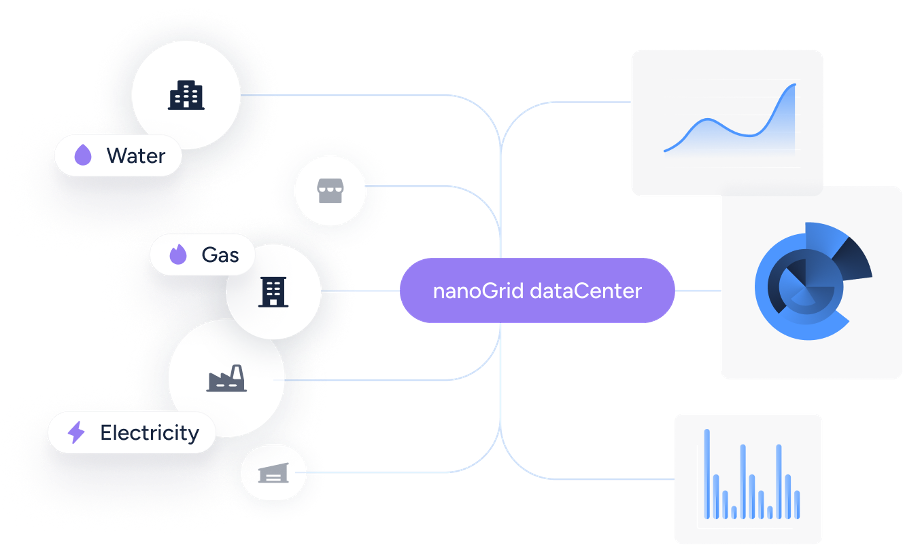
Without traceable, real-time utility data: from every meter, every site, every zone. AI tools simply can’t deliver. Most platforms still rely on monthly invoices or aggregated readings that miss the operational detail needed for real savings, reliable forecasts, or ESG compliance.
nanoGrid changes that.
Its technology makes AI-ready energy insights possible by unlocking minute-level energy data across your portfolio. They don’t replace your BMS, ERP, or EMS. We make them smarter, traceable, and future-proof.
Ready to see how AI energy management starts with better data? Book your 20-minute demo and explore how nanoGrid helps you cut waste, gain control, and future-proof your energy strategy.